
Hot Tub Blower Replacement: Air, Port and Mounting Together
An air blower is the one motor in a spa that works against almost nothing. That is why it survives for years, fails suddenly, and gets replaced on the wrong basis.
Air is its own circuit
Most spa parts enquiries treat the blower as an accessory to the jet system. It is a separate circuit that happens to share a cabinet with the water side.
The water pump moves water through the heater, the filter and the jets. The blower moves air through a manifold to the air jets, with a check valve in between to keep water out of the motor. Nothing in that air path is sized by the water pump, and nothing in the water path by the blower.
The manifold chooses the blower, not the reverse
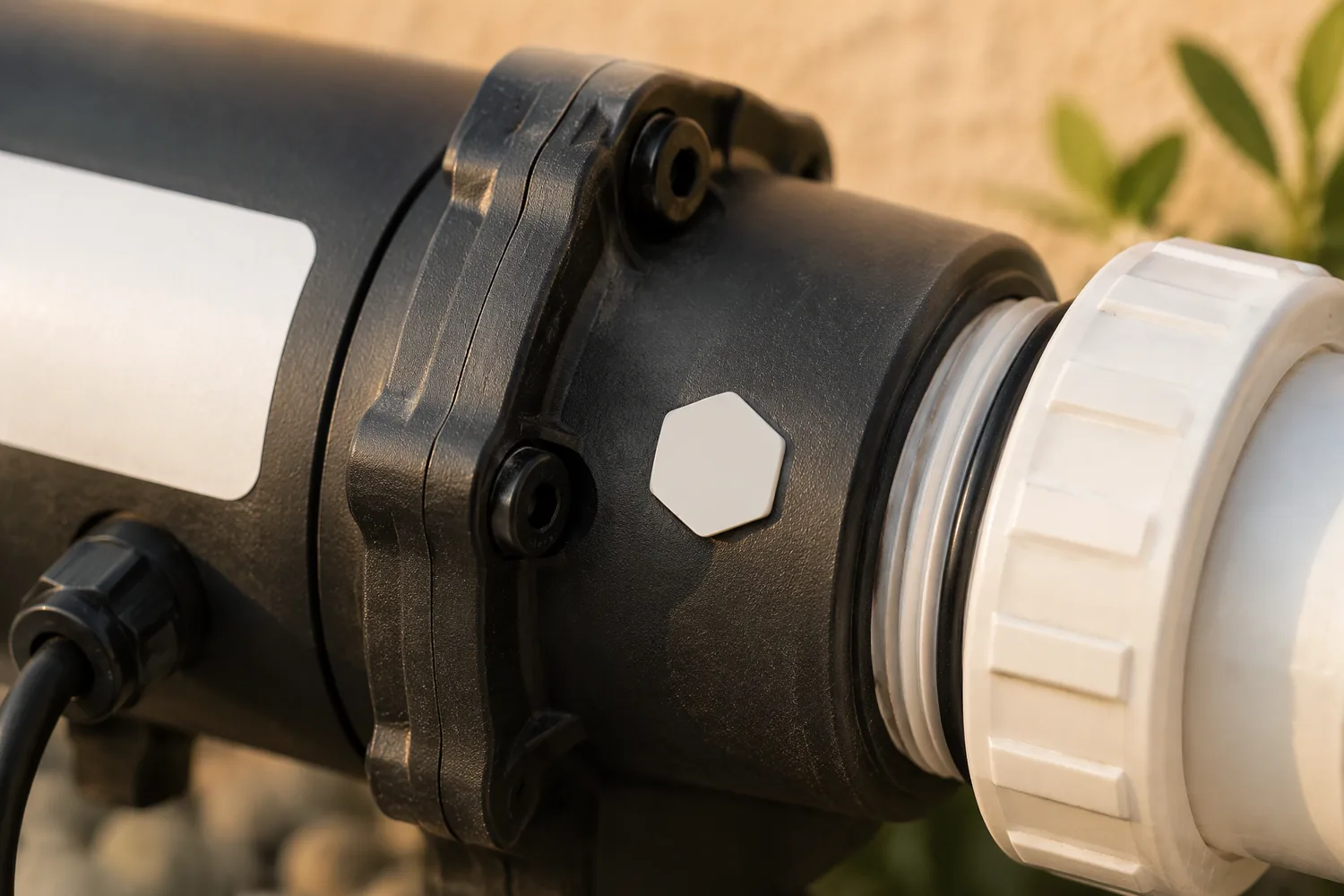
The first measurement is not the motor. Measure the discharge port across its outside diameter and note the hose or manifold that clamps onto it: that port already exists, and the hose, the jet runs and the cabinet space behind it are fixed.
That order matters. A larger motor on an unchanged manifold does not deliver more air at the jets — the restriction is downstream, not at the motor. What it does deliver is more noise, more current draw and a heavier load on the relay that switches it.
So the sequence runs: measure the discharge port, then the motor class that suits it, then the mounting that fits the space. The blower and air control range is quoted in that order.
Water in the motor is a valve question first
A blower that has taken on water is usually described as a failed blower. It is more often a failed check valve, a blower mounted below the water line without one, or a jet that siphons water back when the pump stops — so the valve is specified with the blower, and a customer who already has a sound one keeps it.
This changes what should be in the box. Replacing the motor alone tends to repeat the failure on the same interval, which is why the inline valve is quoted with the blower by default — and why a customer who already has a sound valve is asked about it rather than sold a second one.
The plumbing and seal range is where the rest of that water path is closed, since a weeping union below the blower ends in the same place.
Where it sits decides how loud it is
A blower is a motor bolted inside a wooden or composite box, and the box amplifies it. Foot, bracket or strap changes the answer, and so does the clearance around the unit.
Two replacements of the same motor class can sound completely different in the same cabinet. The one that vibrates against a panel comes back more often than the one that is marginally smaller than the old unit. Send a photo of the blower in place, before removal, and the mounting is confirmed rather than assumed.
How the bather switches it
Switching is a specification, not a detail, because it decides what ships with the blower.
A spa without an electronic topside uses a pneumatic button, tubing and an air switch. A spa with a topside or a timer drives the blower from the control instead. The same motor is supplied into both arrangements, with different parts around it.
This is also where the load lands: the label amperage and the lead length decide what the relay sees, so a larger motor on the same relay is a repeat failure rather than an upgrade.
Warm air is a different order
Where warm air is part of the brief, the blower and the air heater are supplied as one unit. That is not the same as adding a heater to a blower later — the unit is designed as a pair, and the air path runs through both.
Everything else in this article still applies: the port, the mount and the switching are decided the same way, and the heating element range covers the water side of the same repair.
Read the old blower before it comes out
Most of the facts that decide a replacement are unavailable once the unit is on the bench. Five are enough:
– The blower label, legible, showing motor class, voltage and amperage – The discharge port, photographed with a rule across it – How the unit was held, and the space around it in the cabinet – The supply at the installation – How it is switched: air button, topside or timer
Add whether warm air is wanted, and the enquiry can be answered without a second round of questions.
What a blower enquiry should contain
A short, complete enquiry is faster than a long, incomplete one. The list above is the whole of it, plus the destination market.
Worth checking in the same visit: the air jets themselves, since a manifold feeding blocked jets loads the blower differently; the jet range covers the water side of that question; and the lighting that usually shares the same cabinet and the same access panel. The families named here — blowers and air controls, jets, LED lighting and seals — are listed on spa components. A related check sits on the water side, at the heater element and its flange seal.
Frequently asked questions
Is a bigger blower always better?
No. Past what the manifold can pass, a larger motor adds noise and current draw without adding air at the jets.
Why does water end up in a hot tub blower?
Usually a missing or stuck check valve, a blower mounted below the water line without one, or a jet that siphons back when the pump stops.
Does a replacement blower come with the check valve?
It is quoted with the blower by default, because replacing the motor alone tends to repeat the failure.
Can the air button and tubing be supplied with the blower?
Yes, together with the air switch that the button signals.
Next step
Where nothing is switching the blower, the box side of a silent blower covers the circuit that should switch it. Send the label, the discharge port with a rule across it and a photo of the unit in place through contact, and the reply will name the motor class, the mounting and the valve that fit that cabinet.
Related reading: the water side of the same cabinet.
Related reading: how lamps and cells are matched by housing.
Have a product or sourcing question?
Tell us about your requirements and the decision you are working on.
Discuss your requirements