
Hot Tub Winterization Parts: Decide What to Change Before the Freeze
A drained spa still holds water where a drain plug never reaches: the wet end, the heater tube, the manifold behind the jets and the seal at every joint.
Contents
- Read the freeze risk as a parts list
- Separate the parts water sits in from the parts it passes
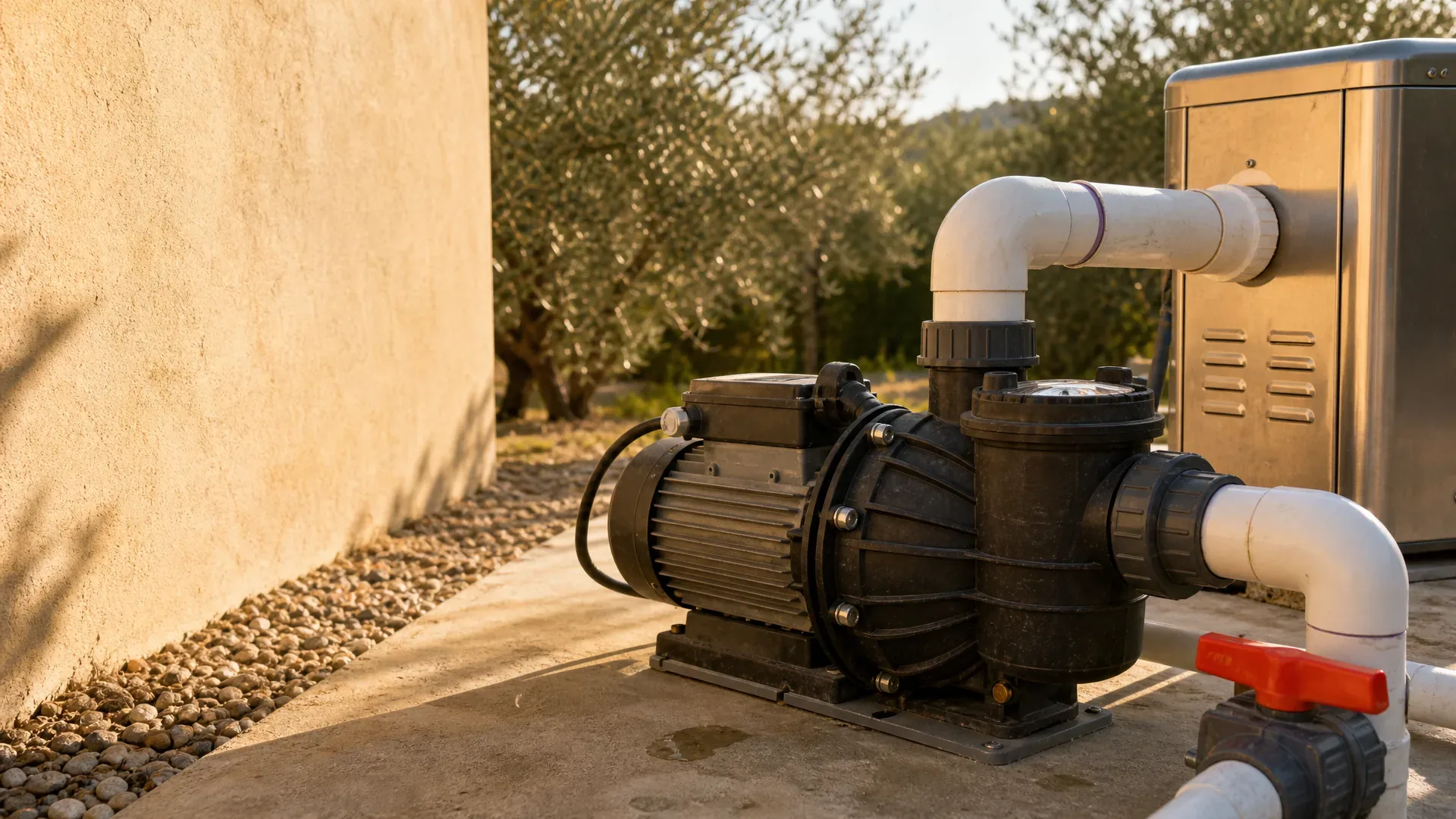
- Start with the wet end, because it is the part that splits
- Treat the heater tube as the second place to look
- Order the unions and seals with the parts they seal
- Choose the cover for what it must survive
- Check the air line before the first hard night
- Decide what can wait until spring
- Send six readings with the order
Read the freeze risk as a parts list
Winterization is sold as a procedure, so parts get bought after the damage. Read it as a purchasing question: which components keep water once the spa is drained, and which are cheap now and costly in spring. A split volute is not maintenance; it is a pump order, a plumbing order and a labour day arriving with the thaw.
Expert tip — On a cabinet with the pump behind the access panel, the drain plug you cannot reach is the one that splits. A tired jet still works; a split volute does not.
Separate the parts water sits in from the parts it passes
Three groups decide the order. Parts that hold water after the drain — wet end, heater tube, manifold, unions — crack first. After draining the shell, water may remain in jet plumbing, flexible lines, pumps, filters and the heater. Follow the spa manufacturer’s winterization procedure to remove residual water from each circuit. Parts that hold nothing, like steps and surrounds, are weather questions. Sorted that way, a cart stops growing into a full set for a two-part fault.
Start with the wet end, because it is the part that splits
Water collects around the impeller once the spa is off, and that trapped volume splits a housing. The motor and face are often reusable while the housing is not, which is why a replacement decision starts from the symptom, not the whole pump. Where a spa stands empty, the drain point matters more than the rating plate — confirmed per pump family on enquiry.
Treat the heater tube as the second place to look
The heater is a tube with an element inside, so it traps water the way the volute does, and the element gasket fails first when it does. Order the element as one set: sheath and thread describe the body, the sensor well the control side, the gasket travels in the same shipment. A heater drained at the pump but not at the tube is one of the commonest freeze failures we are asked to quote for. Read the element fields first.
Expert tip — Photograph the element first. Label, thread and any probe inside it are the whole specification, and none survive a removal.
Order the unions and seals with the parts they seal
A seal is not a spare added later. The seal is a measurement — inside diameter, cord or cross-section, hardness, and the material the water allows — read at its joint, not at a parts list. Order nut, tailpiece and ring together: they wear as a set. An O-ring bought by nominal size alone arrives at a joint built to another section. The seal and union fields follow the same rule.
Choose the cover for what it must survive
A standard insulated cover helps reduce heat loss and protects the spa opening; it should not be treated as a walk-on surface unless that specific product is rated for it. Check the storage and freeze-exposure instructions for each accessory. Density and taper are quoted together; strap, hinge and lifter take the handling. Where a spa stays filled, the cover keeps the cabinet edges above freezing, so one that no longer seals becomes a heating cost. The cover fields that decide it come from the shell.
Check the air line before the first hard night
The blower circuit carries no water and fails differently: water reaches the motor through a check valve that stopped sealing, which makes it a valve order before a motor order. The discharge port decides manifold and hose, so a changed port changes the air path too. Tubing left connected is where a brittle line splits quietly — check the air controls and blowers by port, mount and switch.
Decide what can wait until spring
Not every line belongs on the winter order. Steps, surrounds and lighting upgrades survive cold without help; jets inside a drained shell rarely fail. Freeze failures also arrive in the week temperatures drop, across several spas, so a service company is better served by a route stock — seal sizes, element sets, check valves — replenished against a list.
Send six readings with the order
| Attribute | Why It Matters | What to Look For |
|---|---|---|
| Wet end and drain point | Trapped volume that splits a housing | Volute and drain plug photo, pump label |
| Heater tube and element | Second trapped volume, with gasket | Element label, thread, sensor well, old gasket |
| Unions and seals | The joint decides the section | Inside diameter, cord or section, material |
| Air line and check valve | Water reaches the blower through a failed valve | Valve position, tubing route, port size |
| Cover | Insulation at the edges, and its load | Shell measurements, strap, hinge, lifter |
| Control protection | What is switched off when isolated | Box photo as found, before unplugging |
Every figure above is confirmed on enquiry, from your readings.
Frequently asked questions
Do I need to replace the pump before winter if it still runs?
No. The question is whether the wet end holds water after the drain. A pump that runs in October can still split in January, so the drain point decides the order.
Is it cheaper to drain the spa or to keep it running?
That is a running-cost decision, not a parts decision. Draining the shell alone does not eliminate freeze risk. Residual water in plumbing and equipment must be removed according to the model-specific winterization instructions. Keeping it running moves the risk to supply and cover. Either way, check the wet end and heater tube.
Should seals be ordered at the same time as the element?
Yes. The gasket is part of the element set, and the union ring wears with the nut and tailpiece. Ordering them together avoids a second shipment for a part worth less than its carriage.
Can a cracked wet end be repaired instead of replaced?
Sometimes, and it depends on the housing material and where the split sits. Send a photograph of the crack and the label; we will say whether a housing exists for that family.
Next step
Photograph the wet end, the heater tube, every reachable union and the blower’s check valve, note the cover measurements, then send them through the contact page. We will confirm what must change before the freeze in one checked reply.
—
Have a product or sourcing question?
Tell us about your requirements and the decision you are working on.
Discuss your requirements