
Swim Spa Components: What Changes When the Shell Gets Longer
A swim spa is not a hot tub with more seats. The extra length changes where the water has to arrive, what the cover has to do, and which components quietly stop being interchangeable with the tub range.
Length changes the plumbing before it changes the parts
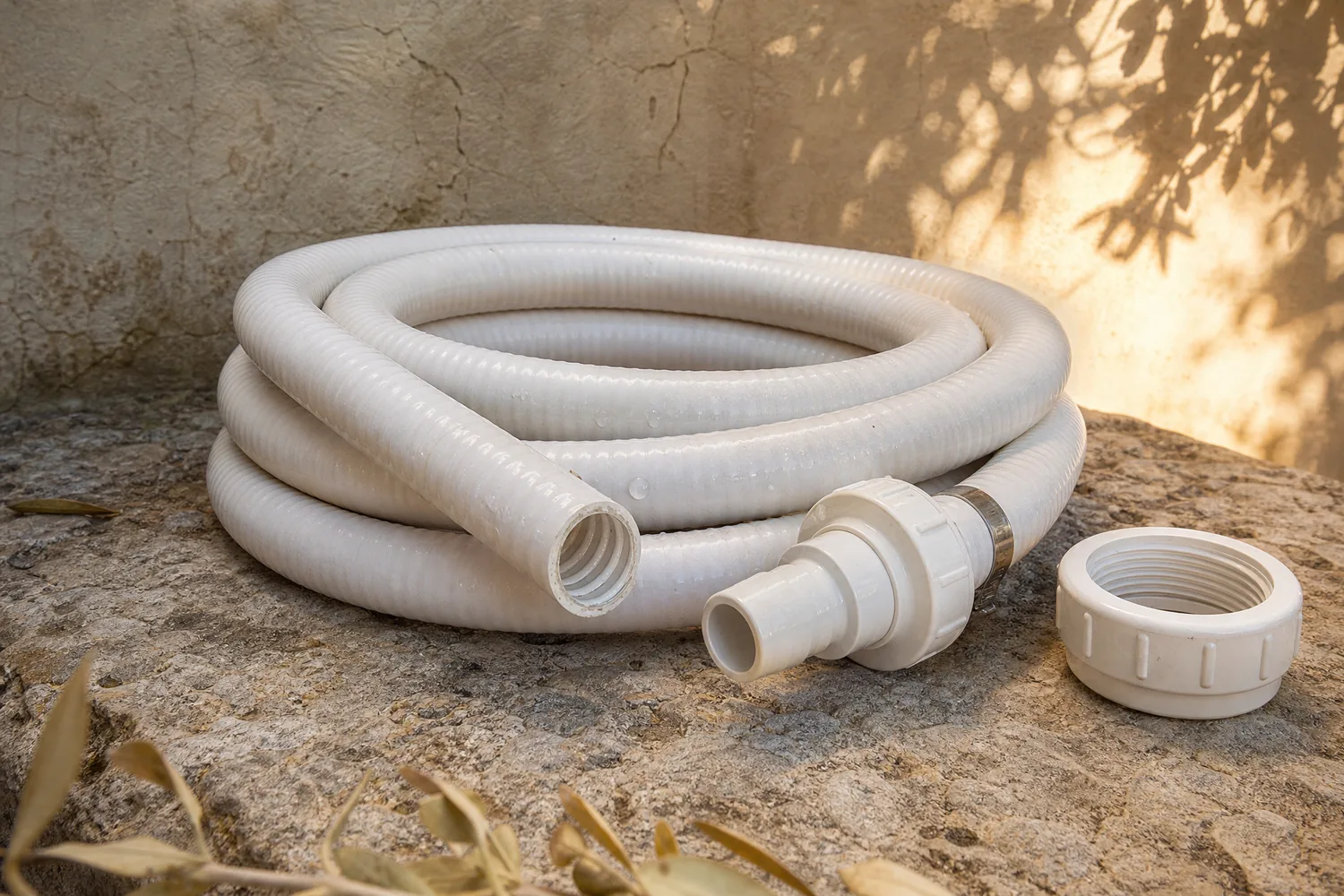
The first consequence of a longer shell is distance. On a longer run the same bore delivers less at the far outlet, so the choice is a larger bore or a second circuit — a value confirmed per enquiry against the shell drawing rather than carried over from a tub.
A shell drawing is therefore more useful at the start of a project than a parts list. A hose that is correct on a tub can be the wrong choice on a swim spa because of the bend it has to make.
Jet count is a zone decision, not a ratio
Buyers often open with a number: more jets, bigger jets. The useful question is different. A swim spa is zoned — swim end, bench run, footwell — and the zones are fed as separate groups rather than as one body of water.
Once the zones are drawn, jet count is a consequence. The families are shared with hot tubs, and each jet is still matched as one set of face, body and thread.
Flow splits between zones
Two zones fed from one pump do not receive the same pressure. The split divides the flow, and the run to the far zone adds its own losses. A jet that feels strong at the near end can feel dull at the far end with nothing wrong with the jet.
That is why a pump conversation should start from the circuit layout rather than from a rating.
Filtration load follows water volume
A longer shell holds more water and usually carries more bathers, so the filter does more work between services. Fit has not changed: a cartridge is still matched on overall dimensions, end connections and media.
What changes is how many the installation carries, and where they are reached from. On a long cabinet the housing can end up far from the door that serves it.
Heat retention gets harder at the ends
Heat leaves through the cover, the waterline, the cabinet and the plumbing, and on a long shell every one of those surfaces grows. The ends are where a cover sits worst and a cabinet is most exposed.
Heat loss is worth stating once, as a site condition. A heat pump is then sized against it, at a stated rating condition rather than from a similar project.
The cover becomes several covers
A tub cover folds once. A swim spa cover is normally a run of sections along the length, each with its own fold line, and every joint is a place where heat and steam escape.
Each section is measured on its own, on the same fields: outline, corner radius and skirt drop, with density and taper quoted together. The cover specification is where a swim spa project most often discovers that its dimensions came from a tub.
Cabinet runs and service access
Long panel runs behave differently from short ones: joints need planning, colour has to match across a batch, and the access cut belongs where the equipment actually sits, rarely the middle of the run.
Height, length and profile still carry a skirt panel order, and the retention method still decides what can be replaced later.
Steps, entry and the swim end
Entry is usually at one end, the same end that competes with the swim current for floor space. The step set is sized from the entry point: the height from standing surface to rim is the datum, and the number of steps follows.
Step heights are cheaper to resolve on plan than on site, because the cover arc wants the same strip of floor.
What to send with a swim spa component enquiry
One page is enough, provided it carries the geometry:
– Shell drawing with the equipment bay marked – Zone and circuit list, with the outlets in each group – Cover sectioning, with the fold lines drawn – Panel layout, joints, and the side each service door opens from – Entry side and the standing surface it lands on
Then separate the families being matched to an existing part from those specified for the first time: jets, cartridges and unions are normally shared with the tub range, while pump circuits, heater, cover sections and panel runs are sized per shell. The two are quoted differently. The families referenced here — PVC hose, jets, pumps, cartridges, covers, skirt panels and steps — are listed on the spa components page.
Frequently asked questions
Are hot tub jets and swim spa jets different components?
The jet families are shared. What changes on a swim spa is how many groups the water is divided into and where the runs end, not the jet itself.
Does a longer shell need a bigger pump?
Not automatically. Flow at the far outlet depends on how the circuits are split and what the run does to it, and a larger motor on the same wet end does not add flow.
Can one cover cover a swim spa?
Usually the cover is made as a run of sections that fold along the length. Each section is measured on its own, and the number of sections follows how the cover is handled and stored.
Can swim spa components be supplied as OEM/ODM?
Yes, across the component families. Where an existing part has to be matched, the interface is confirmed first; where appearance is the goal, the family that carries the look is chosen before the detail.
Next step
Send the shell drawing, the zone list and the cover sectioning through contact, and the reply will name the values still open rather than quoting against a guess.
Have a product or sourcing question?
Tell us about your requirements and the decision you are working on.
Discuss your requirements