
Spa Skirt Panels: Replacing One Panel or Re-skinning the Cabinet
A damaged panel is usually treated as a finish problem. It is a matching problem. A damaged panel is usually treated as a finish problem. It is a matching problem. The cabinet was built to four dimensions — height, length, profile and retention — and a replacement either follows them or changes all four. The brief that carries the order answers seven fields, listed at the end. — and a replacement either follows them or changes all of them.
The panel you already have is the specification
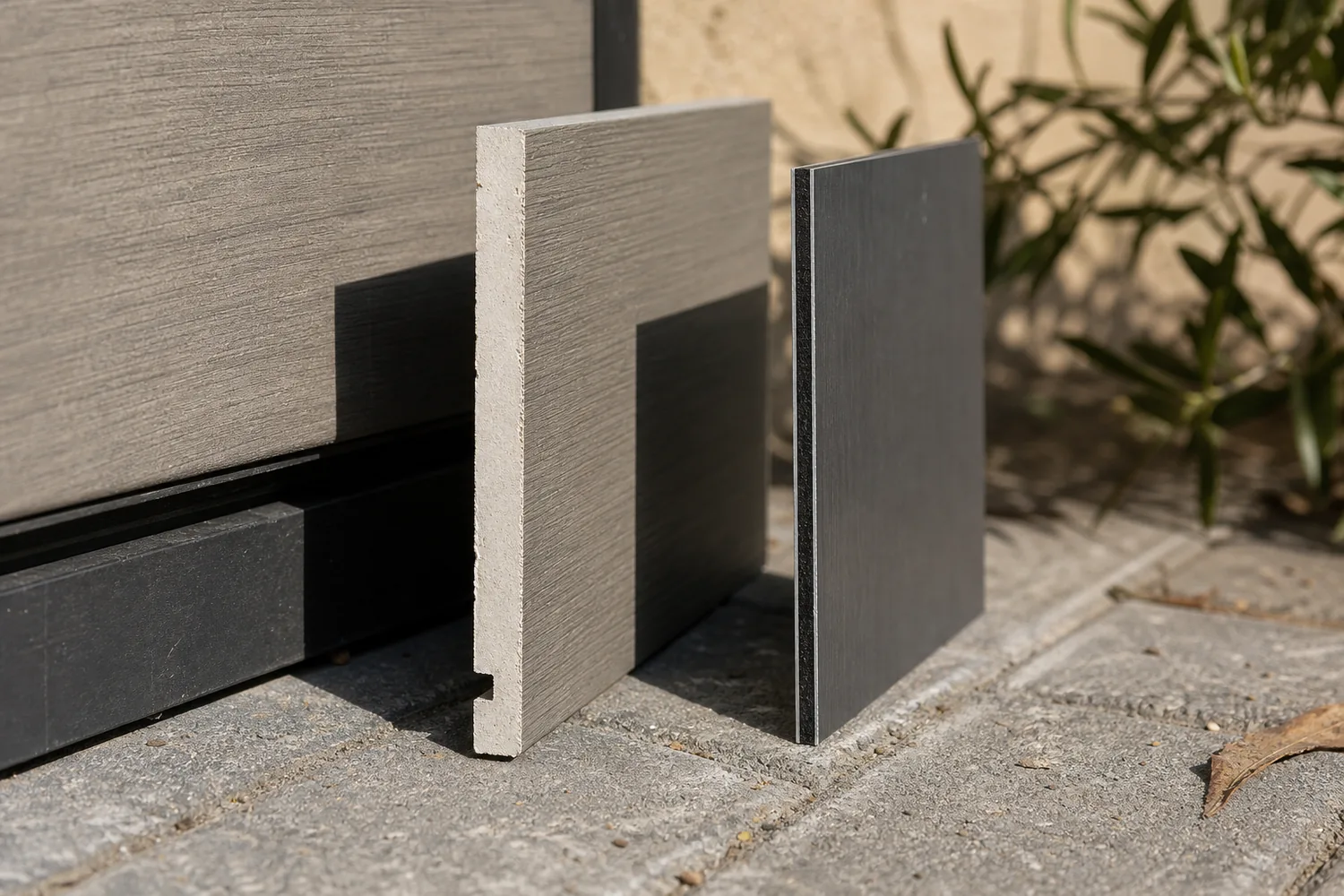
Panel height runs from the base rail to the top edge of the cabinet. Panel length covers each panel and how many run around the cabinet. Profile is the section and whether slats run horizontally or vertically. Add the colour code against the supplier range and the service cut-outs, and the panel is described without an aesthetic opinion.
A replacement order that starts from a colour swatch has skipped the fields that decide fit.
Why a single panel is the harder order
One panel looks like the small order and behaves like the difficult one: it has to match a finish that has stood outside for years, in a profile that may have left the range, at a length cut for that cabinet.
Start with a straight-on photograph of the damaged panel and a close-up of the fixing; those two show whether the profile is still current, which decides the rest. Where profile and colour are still in the supplier range, single panels can be quoted, with the match confirmed per enquiry.
Colour and texture drift
Two panels in the same colour code, made years apart, do not read the same on a cabinet. WPC, PS and aluminium composite age at different rates, and a replacement that matches the reference can still look wrong beside its neighbours.
Where the mismatch matters — a cabinet that faces the approach — the options are to replace the whole visible face, or to move a panel from a less exposed side into the damaged position. Both are layout decisions, worth settling before the cut.
Retention decides what can be swapped
Clips, screws and frame systems are all used on spa cabinets, and they are not interchangeable. A clipped panel comes off without tools; a screwed panel leaves holes behind it; a framed system is a set of extrusions the panels engage.
The fixing type is confirmed against the cabinet construction and the panel profile rather than chosen from the panel alone. A section designed to clip onto one frame will not screw flat onto another, however similar the face looks.
Corners: flat or curved
Corner radius is measured before anything is quoted, because flat panels do not follow a radius. A quotation built on flat panels shows the mismatch at the first corner rather than in the drawing.
A tape alone is not enough at a corner: a photograph shows how the section turns, which a radius dimension does not.
Service access is cut after the layout
Openings for the equipment bay, drain and controls are positioned from measurements of the cabinet, not from a standard drawing: measure the cabinet, place the openings, then cut.
Photograph the bay with the door open before any panel is specified. Where a water pump or control pack is being replaced at the same time, the opening is sized for what will be there afterwards.
When re-skinning the whole cabinet makes sense
A full re-skin is the right answer in three situations, and in each the reason is outside the panel. The colour match has gone and no current panel will sit beside the old ones. Several panels have failed at once, which usually means the retention or the frame rather than the material. Or the cabinet is being changed anyway — new equipment, or a different access direction.
A re-skin is also the only route that lets the material change, which still requires a review of dimensions, fixing, service access and the requirements of the proposed system, because retention and panel section move together.
Both routes assume the frame is sound. Check it before ordering: press a panel at mid-height and at the base rail; movement, a soft rail or water tracking behind the skin points at the frame, not the panel. Water pooling at the base, a soft base rail or panels that shift when pushed point at the structure behind the skin, and a new panel over a failing frame repeats the failure.
A replacement brief in one page
Seven fields carry a replacement: panel height, panel length and how many run around the cabinet, corner radius, profile and slat direction, fixings, colour code, and service access cut-outs. Add the brand, model and year, taped measurements, a straight-on photograph with a close-up of the fixing, and the equipment bay layout.
Two quotations that answer those fields against the same cabinet can be compared. A quotation that offers a colour and a price is answering a different question.
Frequently asked questions
Can I replace a single damaged skirt panel?
Where the profile and colour are still in the supplier range, single panels can be quoted. The match to the existing panel is confirmed per enquiry rather than assumed from the colour code.
Can I change the panel material without changing the cabinet?
That requires a review of dimensions, fixing, service access and the requirements of the proposed panel system, because the retention method and the panel section change together.
How are panels held on a spa cabinet?
Clips, screws and frame systems are all used. The fixing type is confirmed against the cabinet construction and the panel profile rather than chosen from the panel alone.
Are service cut-outs made to order?
Yes. Openings for the equipment bay, drain and controls are positioned from measurements of the cabinet, so the equipment layout is photographed before the panels are cut.
Next step
The spa skirt panels page sets out the fields and the cabinet references a quotation is built from. Send the panel photographs, the measurements around the cabinet and the access requirements through contact, and the reply will say which values are still open. A cabinet order usually runs alongside the cover and the steps; the full cabinet range is listed on the spa components overview.
Have a product or sourcing question?
Tell us about your requirements and the decision you are working on.
Discuss your requirements