
PVC Spa Hose Sizing: How to Specify Bore, Wall and Fittings
Most spa hose enquiries arrive as a diameter and a photograph. Bore is the first number, but it is not the decision. Three questions sit behind the specification: what the hose does, what it has to withstand, and how it reaches from one connection to the other.
Begin with the duty, not the diameter
The same bore can be right on one run and wrong on the next, because the duty changes. A suction run carries water into the pump and is the most sensitive to bore and wall; a hose that is too soft collapses under the pull instead of delivering flow. A return run works at lower demand, jet feed lines run at higher velocity, and a drainage run works intermittently. Name the duty in the brief — a hose quoted without it is quoted as an appearance rather than a part.
Jet feed lines set the velocity this hose has to carry, and the jet plumbing page lists the fittings they use.
Spa hose bore: what the inside diameter decides
Inside diameter — the bore — sets the flow the hose can carry, and it is the field most often copied from the hose being replaced. That is only sound if the old hose was correct for the pump. Undersizing costs performance at the jet face and makes the pump work harder for the same output; oversizing is not automatically safe either, because a larger bore changes how the run behaves and takes space in the bay.
Wall thickness is where pressure and bend meet
Two hoses with the same bore and a different wall are not interchangeable. Wall thickness affects pressure and bend: more wall resists pressure and collapse on suction, and it also makes the hose stiffer. That is why a same-size replacement can pass a visual check and still fail at the clamp, or at a bend it can no longer take. Ask for bore, outside diameter and wall together.
Pressure and temperature belong in the same answer
Working pressure is what the hose is rated to work at; temperature range is the range it is rated for in service, with water treatment conditions alongside them. These are confirmed against the actual hose rather than assumed from a product family. A quotation that returns a bore alone has not addressed the part of the specification that fails first.
Bend radius decides whether the hose is the right component
Bend radius is the tightest bend the hose takes without kinking, and it is the field that most often rules a hose out — not because the size is wrong, but because the route is. In a compact equipment bay the run may need elbows, a heavier wall, or a short section of rigid pipe. Photograph the run rather than the hose: the tightest bend in place tells a supplier more than a coil on a bench.
Ask for the bend radius figure and compare it with the tightest bend on the run; if the route is tighter, the run needs an elbow or a heavier wall.
The two ends are half the specification
End fittings are quoted as barbed, threaded or clamped, with the thread and tailpiece confirmed from the existing plumbing. A hose with the correct bore and the wrong end preparation is a re-order, and the delay lands on the installation. Send a photograph of each fitting with a tape across it; where the marking has worn off, bore and outside diameter are measured at both ends and the wall follows from those readings.
The filter plumbing page shows the union and tailpiece conventions used at the suction end.
Rigid pipe, flexible hose, or both
Flexible hose earns its place where the run has to turn, move, or be assembled into a tight bay. Rigid pipe holds its shape where the run is long and straight behind panels or through structure. Most installations are a mix, joined at elbows and unions, and where the service points sit is a decision to take while the layout is still open.
Coil length, marking and packing
Coil length is quoted per enquiry together with the bend radius the route needs, so the two are answered as one. Colour, packing and OEM labelling are quoted with the hose; they change what arrives, not what fits.
Compare a quotation against the brief
A quote is only checkable if it returns the fields you sent in the same convention: bore, outside diameter, wall, working pressure, bend radius, end fittings, temperature range and coil length. Where a proposal answers in a different convention — nominal against measured — that difference belongs in the brief, not in an argument at delivery.
Frequently asked questions
Is the inside diameter enough to specify a spa hose?
No. Outside diameter, wall thickness, working pressure and the fittings at each end are also needed, because the wall decides pressure and bend behaviour and the ends decide whether the hose can be joined at all.
Can a hose be matched from a photograph alone?
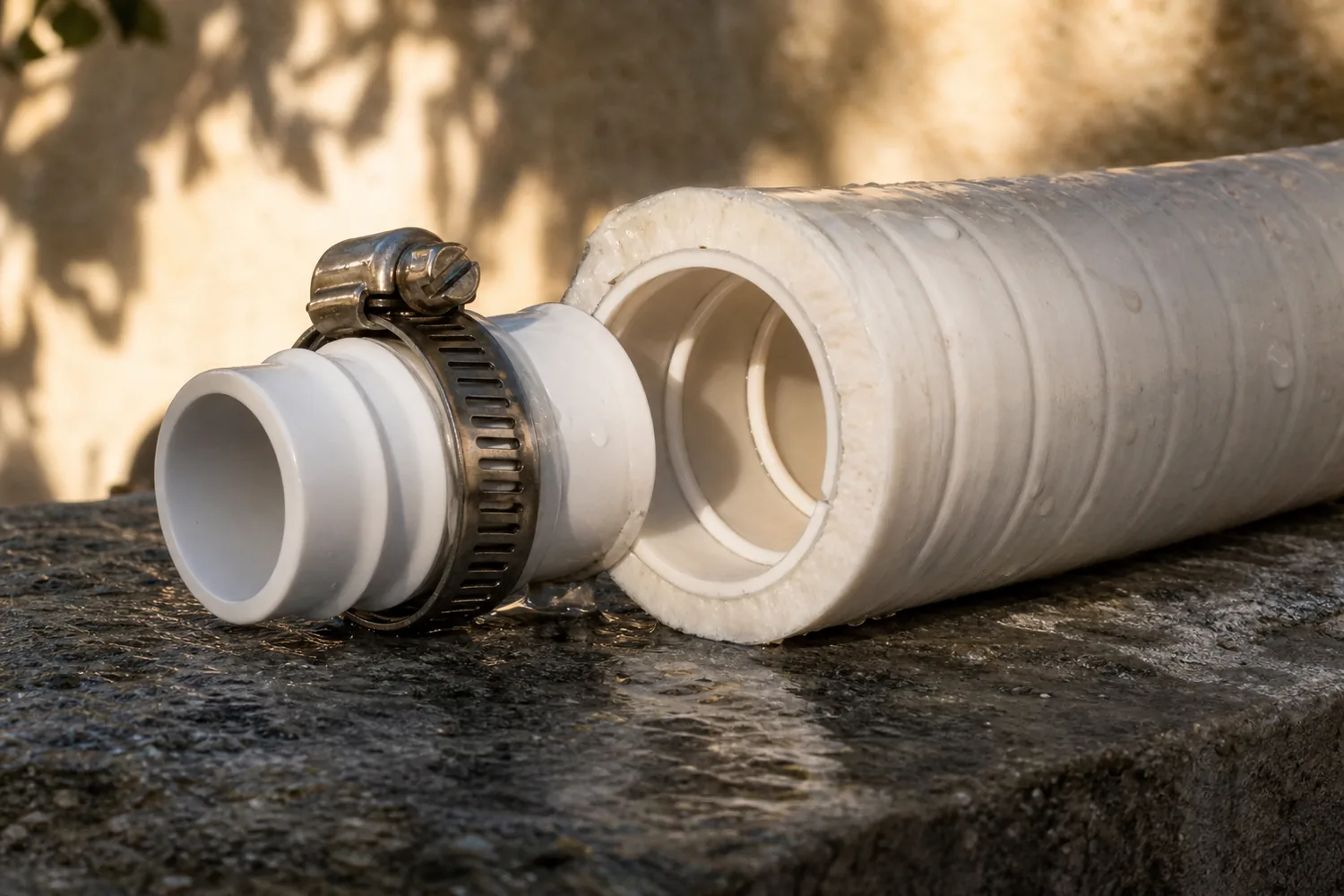
No. A photograph establishes the route and the appearance; dimensions, construction and joining method still have to be confirmed. A cut-end photograph with a tape across it is the most useful single image to send.
Why does the same bore sometimes not fit?
Because bore is one field out of several. Two hoses with the same inside diameter can differ in wall thickness, outside diameter, bend radius and end preparation, and any of those can stop a replacement from seating or routing.
Can a flexible hose replace a rigid pipe run?
Sometimes. It depends on the bend radius the route needs and the space in the bay, and it is confirmed against the proposed hose rather than assumed from the existing layout.
Next step
The PVC hoses page lists the field set and the references used to match an existing hose. If the run also involves the pump or the heater connection, send those details in the same brief — water pumps and heat pumps both change what the plumbing has to carry, and spa jets set the demand at the far end. Send the route photographs and the two end measurements through contact and the reply will say which fields are still open. The wider range sits on the spa components overview.
Have a product or sourcing question?
Tell us about your requirements and the decision you are working on.
Discuss your requirements