
Service parts · 05
Ozone, UV and Salt System Parts
Water treatment is consumables pretending to be equipment. Lamps, cells and generator chips have a service life, and the part that fails is almost always the part that wears.

Cartridge, lamp or salt cell.
Consumables first, because that is what a service company reorders.

Ozone generator
Chip or corona-style generator module for spa water, supplied with the injector, the check valve and the tubing that keep water out of it.
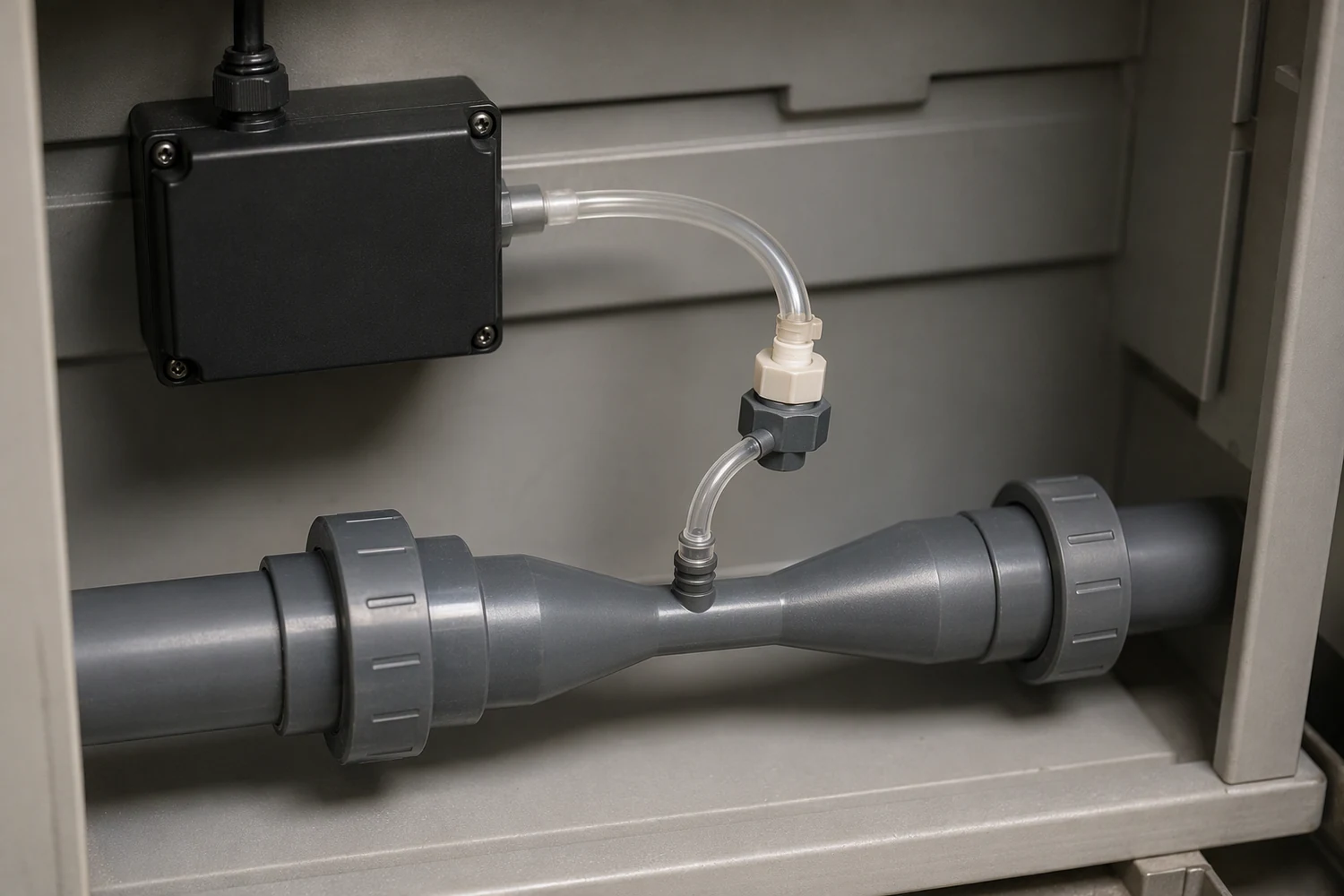
Ozone consumables
Replacement chip, fuse, tubing and the check valve that fails before the generator does.
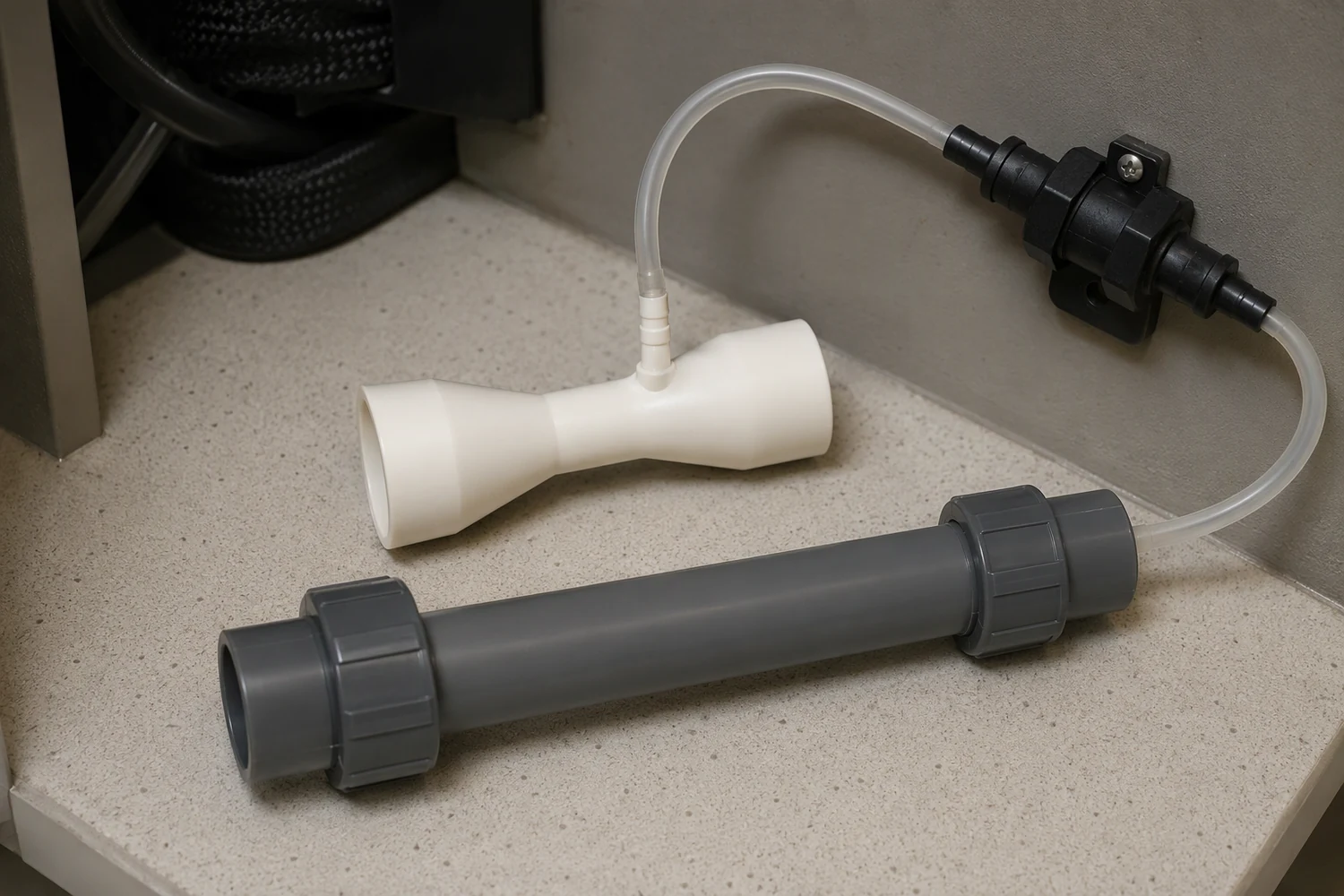
UV lamp and quartz sleeve
Lamp, quartz sleeve and the O-ring that seals it, matched on length, wattage and base.
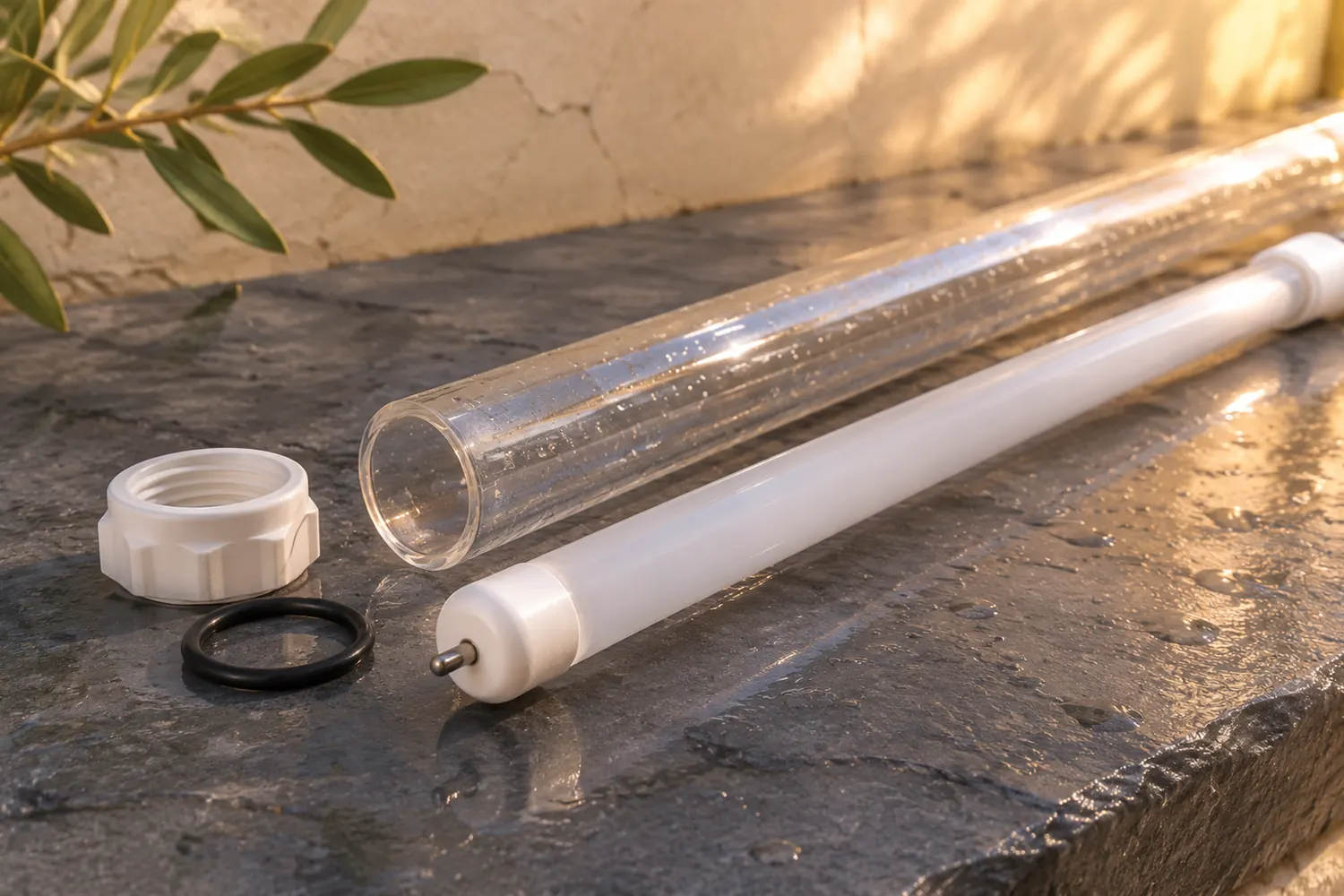
UV ballast
Ballast that drives the lamp, quoted with the lamp because the pair is usually replaced together.

Salt cell electrode
Electrode cell for salt-chlorine systems, matched on cell type, length and housing.
Cell housing and fittings
Housing, unions and the seals around the cell.
Reference data
Lamp, cell and sleeve.
Lamps and cells are matched on dimensions and on the housing they sit in. Output figures printed by the maker are the reference; we do not restate them as our own.
| Field | Typical options and what we confirm |
|---|---|
| Ozone output | Treatment capacity of the generator (As declared by the maker; confirmed per enquiry) |
| Lamp length and base | Typical: 950 mm lamp length. Base and sleeve seating confirmed per enquiry. Lamp length and wattage are quoted as a pair; a longer lamp is used at the higher ratings. |
| Lamp wattage | Quoted range: 80 – 400 W across the UV range. The ballast match is confirmed per enquiry. |
| Quartz sleeve size | Sleeve outside diameter and length, measured on the old sleeve; the O-ring seat decides the seal. |
| Ballast type | Photograph the ballast label; the start type is read from it rather than assumed. |
| Cell type and length | Options: titanium plate cell, 2 – 25 g/h chlorine output. |
| Voltage and frequency | Typical: AC 100–240 V, 50/60 Hz. |
| Service life | Rated hours declared by the maker (As declared; confirmed per enquiry) |
| Reference system | Why it helps |
|---|---|
| Generator or lamp label | Model, output and voltage as printed |
| Housing photo | Sleeve diameter and seal arrangement |
| Old lamp | Length and base, measured |
| Spa brand and model | Narrows the treatment fitted at build |
| Water volume | Sizes ozone and cell capacity |
Consumable service life is quoted as declared by the maker rather than as a promise of ours. Brand names are used for cross-reference only.
What to read on the old unit.
These parts fail on dimensions more than on brand, so a rule in the photo saves a round trip.
- Photo of the old lamp, cell or generator label
- Length and diameter measured against a rule
- Voltage and frequency at the installation
- Water volume of the spa or swim spa
- Whether the housing is being replaced as well
- Destination market, since electrical approval follows it
What we do not copy.
Generators and cells are supplied as service parts. We do not copy a competitor’s control board or a complete sanitising unit built around proprietary firmware.
Consumables and housings
Lamp, sleeve, ballast, cell, generator module and the fittings around them.
No firmware copies
Units whose behaviour is defined by locked firmware are not reverse-engineered.
Documents per order
Electrical approval follows the destination market and ships with the goods.
Related reading: lamp, cell and generator parts.
Questions about water treatment parts.
How often does a UV lamp need replacing?
The maker declares a rated life in hours; the practical answer is usually once a year in a domestic spa.
Can I replace the lamp without the ballast?
Yes, if the ballast is sound. The two are often changed together because a failing ballast shortens lamp life.
Are ozone generators repairable?
The chip and the check valve are replaceable; a cracked corona cell is not.
Do salt cells come in different lengths?
Yes, and the housing they sit in decides which length is offered.
Can you match a cell without a model number?
With the cell length, the thread at each end and the housing photo, usually yes.
Which approvals apply?
Tell us the destination market; the approval route is confirmed with the documents that ship with the order.
Parts that keep treatment running.
Water treatment rarely travels alone.

Send the unit detail for a checked reply.
One enquiry covers the treatment part, the fittings it needs and the market it ships to. Replies come from the person who checks the specification, not an autoresponder.