
Service parts · 03
Blowers and Air Controls
Air is the part of a spa that is either silent or obviously broken. Blowers, buttons, manifolds and the check valve that keeps water out of the motor.

Blower output, mounting and control.
The blower is chosen by port, mount and supply; the controls around it are chosen by how the bather switches it.

Air blower
Motor-driven blower for air jets, in the common motor classes, with 1.5 in or 2 in discharge and a mounting foot or bracket.
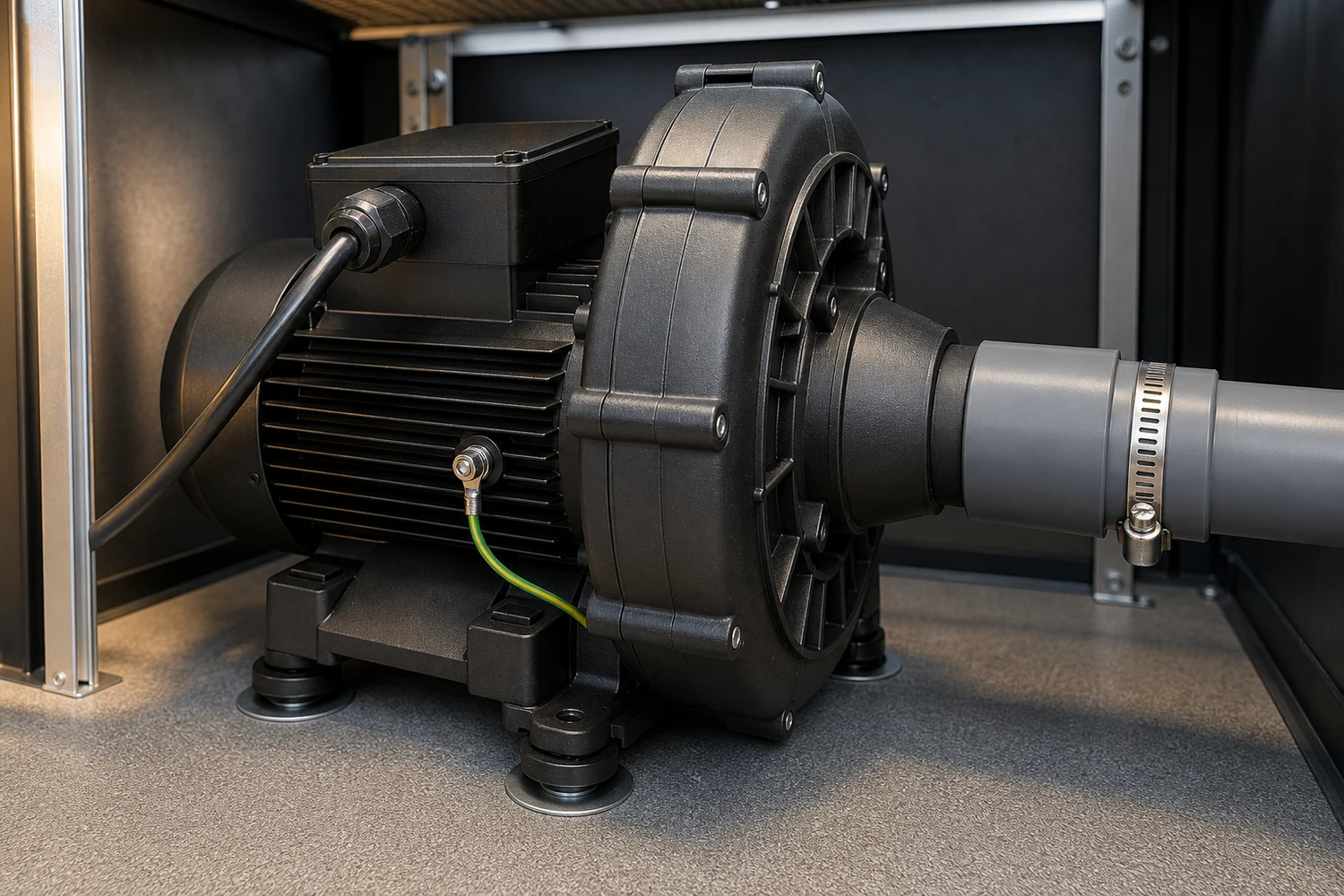
Blower with heater
Where warm air is wanted, the blower and the air heater are supplied as one unit.
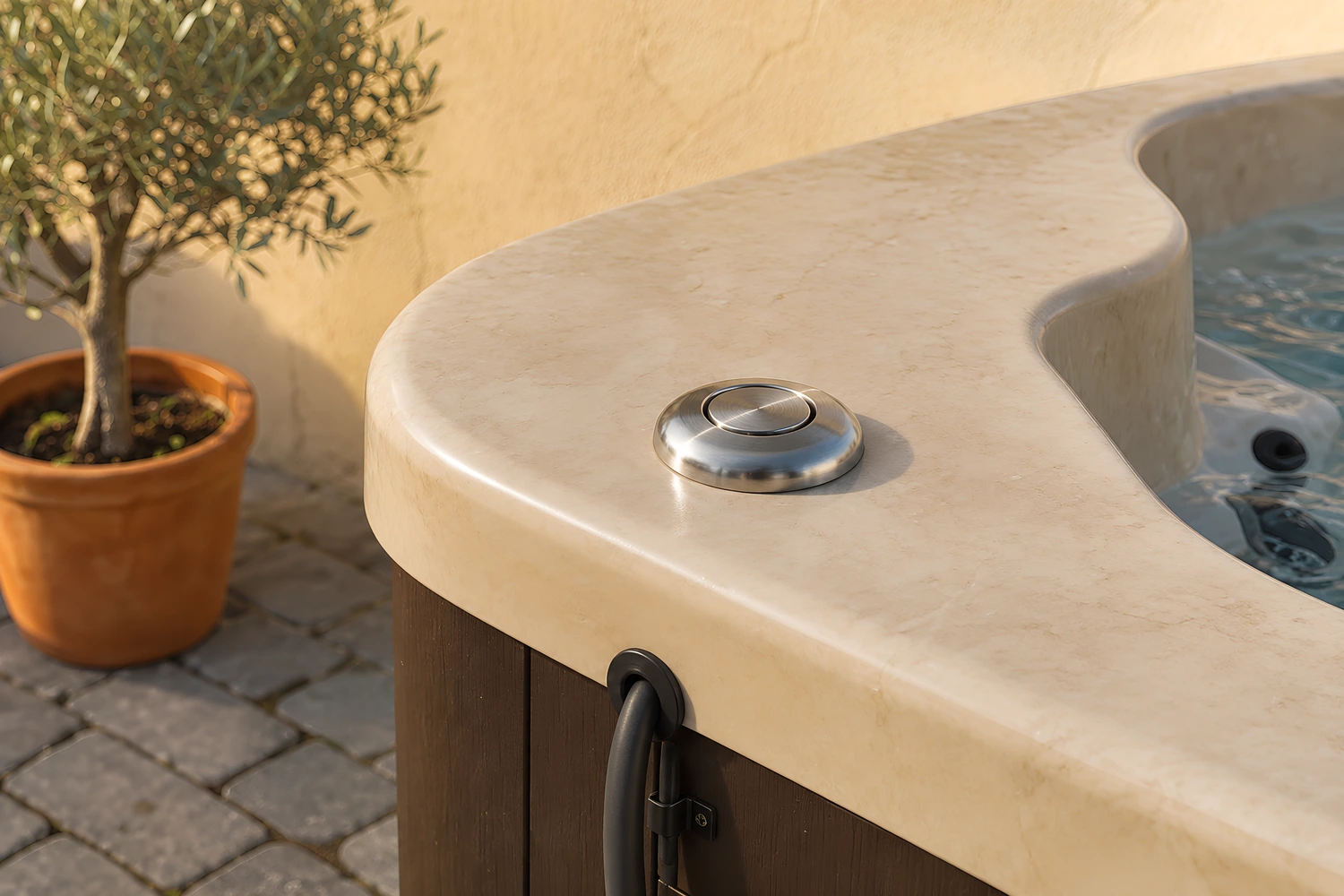
Air button and air switch
Pneumatic button, tubing and the air switch that signals the control, for spas without an electronic topside.
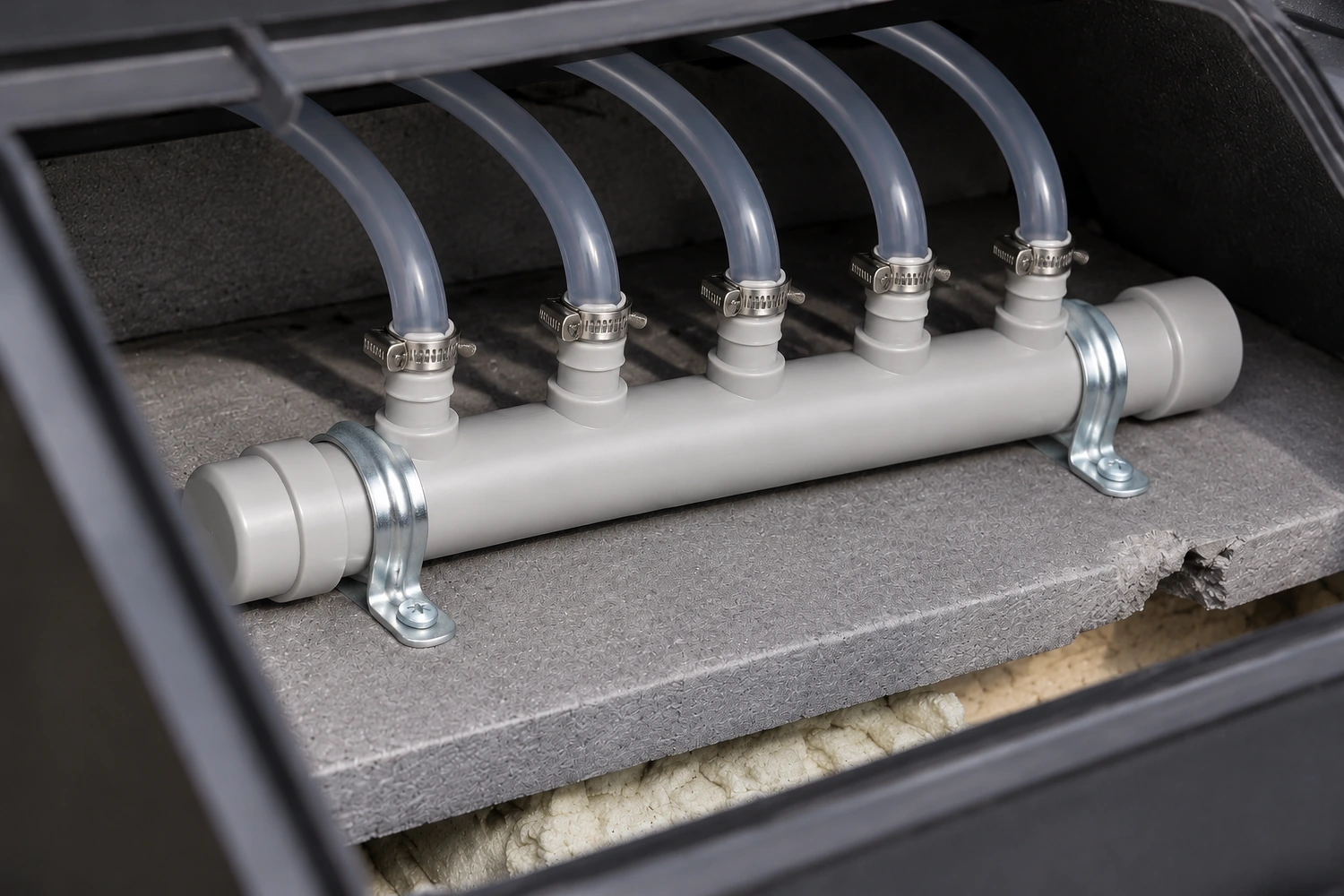
Air manifold and check valve
Distribution manifold for the jet runs, with the inline check valve that stops water siphoning back to the blower.

Blower mounting parts
Brackets, gaskets and the vibration mounts that keep the blower quiet in the cabinet.
Reference data
Motor, port and mounting.
Blower failures are usually water ingress or a seized bearing. Both are answered by the same three facts: where it mounts, what it discharges into, and how it is switched.
| Field | Typical options and what we confirm |
|---|---|
| Motor rating | Available power ratings, voltage and connection options are confirmed against the selected blower model. |
| Voltage and frequency | Typical: 110–120 V and 220–240 V. |
| Discharge port | Size the manifold or hose connects to (1.5 in or 2 in typically; confirmed per enquiry) |
| Mounting | Foot, bracket or strap, and the space in the cabinet |
| Air heating | Options: with or without an integral air heater. |
| Check valve | Prevents backflow into the blower (Supplied with the blower or separately) |
| Amperage and lead length | Reach to the control box and the load on the relay |
| Noise treatment | Mounts and enclosure that decide how audible it is |
| Reference system | Why it helps |
|---|---|
| Blower label | Motor class, voltage and amperage as printed |
| Spa brand and model | Places the blower and its bracket in a known cabinet |
| Port measurement | Decides the hose or manifold that fits |
| Mounting photo | Shows how the old unit was held and where it sat |
| Switching | Button, topside or timer |
Blower classes overlap between makers, so the label and the port are quoted rather than a single model number. Brand names are used for cross-reference only.
What to check on the old blower.
A blower enquiry needs six facts to be answered without a second round of questions.
- Photo of the old blower label
- Photo of the discharge port with a rule across it
- How the blower is mounted, and the space around it
- Voltage and frequency at the installation
- How it is switched: air button, topside or timer
- Whether warm air is required
Water in the motor.
Most blower failures are water reaching the motor through a missing or stuck check valve. The valve is quoted with the blower by default, because replacing the blower alone tends to repeat the failure.
Check valve by default
Inline valve supplied with every blower quotation unless the customer already has one.
Mounting checked, not assumed
A replacement that vibrates against the cabinet is returned more often than one that is too small.
No control electronics
We supply the blower and the pneumatic switch; the spa pack that drives them stays out of scope.
Questions about blowers and air controls.
Is a bigger blower always better?
No. Beyond the manifold’s capacity it adds noise and current draw without adding air at the jets.
Why do blowers fill with water?
A failed check valve, a blower mounted below the water line without one, or a jet that siphons back when the pump stops.
Do you supply the air button and the tubing?
Yes, with the switch that the button signals.
Can a blower be supplied with a heater?
Yes, where warm air is part of the brief; the heater and blower are quoted as one unit.
What decides the port size?
The existing manifold or hose. Changing port size means changing the plumbing around it.
Can you supply 120 V and 230 V versions?
Both are quoted; the supply at the installation decides which is offered.
Related reading: port and mounting before motor size.
Parts that feed the air line.
Parts that share the same cabinet and the same repair visit.


Send the blower detail for a checked reply.
One enquiry covers the blower, the fittings it needs and the market it ships to. Replies come from the person who checks the specification, not an autoresponder.